
Good Grief
Processing loss and better understanding oneself

I had the kind of relationship with my mother that I hope to have with my own children when they’re older. We were truly great friends as much as we were mother and son. She was a selfless, kind and thoughtful woman. She possessed an almost childlike naivety, where she approached life with the purest heart, operating under the basic frameworks of Karma. She never tried to be cool, she just was.
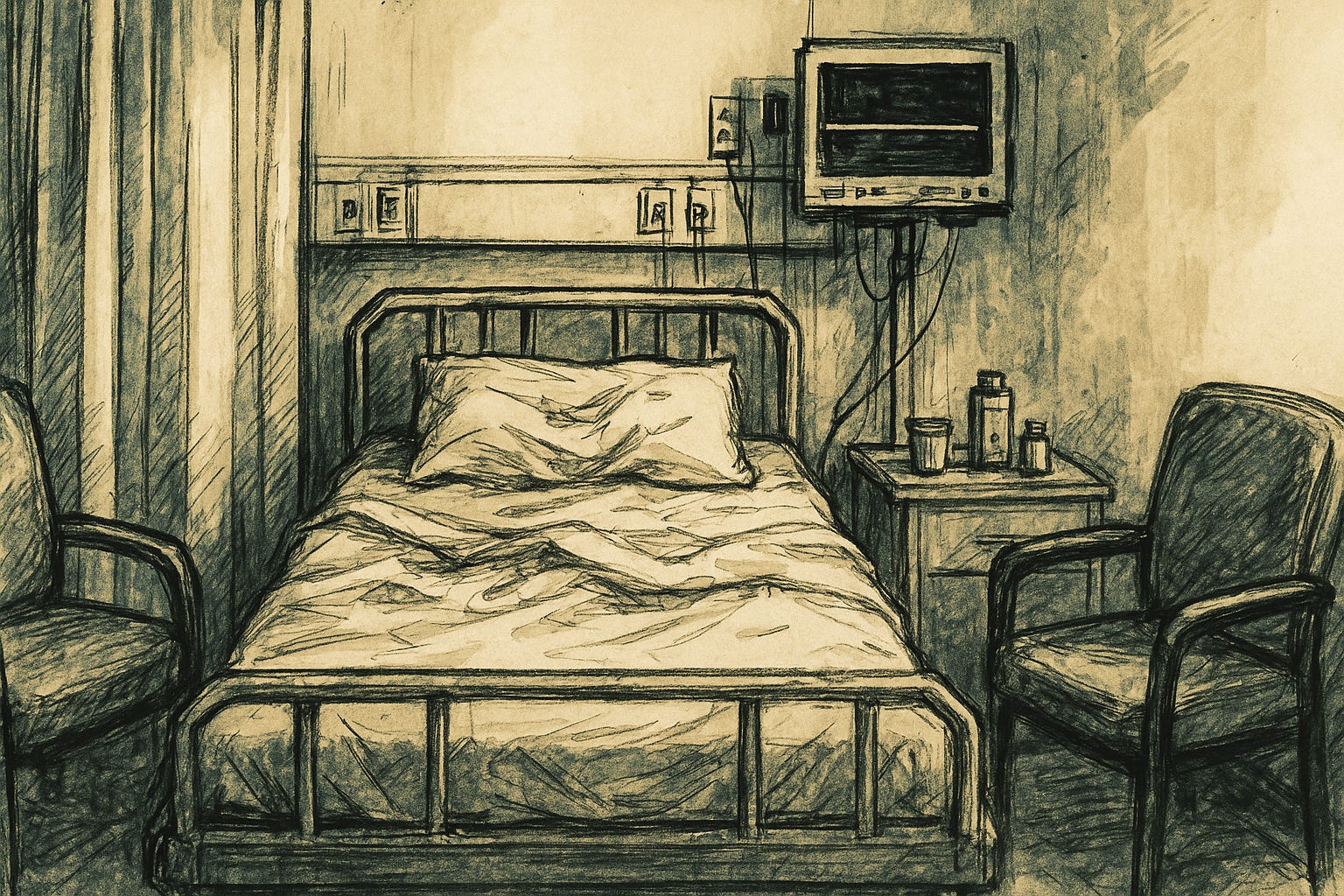
She died in hospice care two days before her 58th birthday. I sat by her bedside, holding her hand as she passed away. Her sister was with me. I was sad, of that there’s no doubt but mostly by this point I just felt empty and a little numb. I’d been staying at the hospice for the last week as I wanted to make sure she wasn’t alone when she finally let go. I naturally wasn’t sleeping well and had been living in a constant state of stress as I’d been her carer for the best part of the last year.
She was diagnosed with pancreatic cancer in the February before the Covid pandemic and was living about 3 hours’ drive from where I lived at the time. She had a lifesaving operation called a Whipple procedure and made a pretty good recovery, though the subsequent chemotherapy she didn’t tolerate very well. The saddest thing to witness was her trust in the world just withered away over time. Everything she had believed about how the world worked had been completely ripped apart. It turns out that being kind, considerate and thoughtful isn’t enough to help you avoid a terminal diagnosis at 56.
Her illness effectively brought about an end to the relationship she was in at the time and she didn’t have any other children. At the point of initial diagnosis, she was a carer for her own mother who had a chronic lung condition that required her to be on oxygen 24/7, so this, coupled with the pandemic really threw everything up in the air. We managed to muddle through until early 2021 until which point the specialist advised the cancer had reoccurred and Mum’s symptoms became debilitating to the point she was struggling to care for my grandma. We moved them both closer to where I was living - my grandma went into care and Mum moved into a ground floor apartment around the corner from me.
The decline was gradual but undeniable. She was walking her dog through the summer but by the end of August her depleted energy levels and consistent pain were affecting everyday tasks. I would work from her spare room 5 days a week and then spend time there at the weekends. By autumn 2021 we had to employ a cleaner to come in once a week and also some care to come in twice a day to help with meals and some basic tasks.
It was around September that it began dawning on me that this really was likely only going to end one way. I had been practicing yoga and meditation for a few years and explored the idea of meditating the reality of living a life without her. I was also aware that the final stage of grief is acceptance, so, true to my impatient nature, I wanted to skip straight to the end and come to terms with the loss prior it even happening - morbid, hey?! I think I just wanted to be strong by mentally preparing for the inevitable. My thinking being, if I had accepted the fact she would eventually die, it would allow me to be more present and not have my judgement/ability impacted too much by “negative” emotion. I’d read quite a bit about how during deep meditative/slow brainwave states, you can essentially “reprogramme” your brain, so the thought process was that I could accept it before it even happened allowing me to bypass the inevitable emotional rollercoaster of coping with loss.
Most people will experience imposter syndrome in their life but there was no better example of this for me than when I realised I was the one who had to solely make decisions on her care, appointments, medication etc. Caring for a parent will always be challenging, regardless of age. The dynamic shift is jarring to the system and I imagine even if I’d been 60 and caring for her in her 80’s, it would have been equally difficult but in different ways. I was in my early 30’s and had just become a father for the first time. Being entirely truthful, I subconsciously assumed that someone would kind of pick up the slack. That someone would come in to manage the situation and give advice on care or the logistics of it all. It’s a similar feeling to that of having your first child. You take this tiny human home that cannot survive without you and it quite quickly dawns on you that whilst you can ask for advice, the decision making is down to you as a parent(s). I imagine it’s much the same as starting your own business. If I don’t do my job as an employee I may be reprimanded/penalised in some way but ultimately someone will cover my arse. If you’re running your own business and don’t turn up on Monday, the job simply doesn’t get done!
I didn’t cry at her funeral and I barely shed a tear the night she died. I had mourned her already in a way, or at least I thought I had. I felt numb. I had intellectually acknowledged the situation but what I missed was the part where you actually feel it. I always wanted to appear in control and never let myself be overcome with any kind of emotion. I never let myself feel the pain of losing someone so close to me. Grieving is individual, that is quite clear but there are definitely ways not to approach it. I had accepted it, yes, but I didn’t emotionally or spiritually process it. I meditated in the morning and drank in the evenings. I’ve wrote about the positives of meditation in other pieces and ironically since this experience, meditation has gone a long way to healing my nervous system and improving my overall outlook on life, but I was using it as a tool to numb myself. The same goes with alcohol. I recently wrote a piece that championed responsible, deliberate and moderate alcohol consumption - almost used in a ceremonial way but again, I was abusing it to try and blunt the edges of emotion. What resulted was anxiety, heart palpitations, chest pains, a heavily dysregulated nervous system, digestive problems, pelvic floor dysfunction, skin issues, bad sleep. This in my mind is largely the result of supressed emotions.
Humans don’t instinctively know how to deal with stress/trauma. There’s a fascinating video on YouTube of an impala who escapes the jaws of a leopard who then goes and stands under a tree and shakes uncontrollably to dump leftover stress and trauma chemicals (adrenaline, cortisol etc). Conversely, humans do things like trying to stay busy to keep their mind off of the traumatic incident, resulting in the body storing these stress responses in various different forms that then manifest into ill-health and disease.
I reflect periodically about this time. I regret having a lack of patience with Mum during the harder moments but I look back at that guy and I think he did his best. I feel compassion for the man who was thrust into a shitty situation with no real coping mechanisms to deal with it. I love myself now. I can’t say I didn’t love myself then because I didn’t even know who I was. I lived life like a man floating down a river approaching some ominous looking rapids without a raft, paddle, helmet or life jacket. But, from some of the worst situations, glimmers of positivity and opportunities to grow can be born. I’m a better husband. I’m healthier, physically, spiritually and emotionally. I’m a better father. I’ve learned so much about the body, the mind, the psyche and myself during those times. I would swap it all to have Mum back but we must make best of the situation we find ourselves.
Waylon